

May in Maryland brings pollen, oak, and grass into the air all at once.
You vacuum the floors. You dust the shelves. You wash the bedding more often than usual.
Yet the sneezing, the watery eyes, and the scratchy throat keep showing up at home.
That feeling of fighting an invisible enemy in your own house is exhausting.
The surfaces are not the real problem. The air is.
Your central HVAC system pulls air from every room, runs it across the coil, and sends it back out through the supply registers.
If the filter is weak, the ducts are dirty, or the system has no indoor air quality support, that loop spreads allergens through every room you live in.
Lexington Park homes get hit harder than most because the same warm, humid weather that fuels pollen growth outdoors also encourages mold and dust mites indoors.
In this article, we'll cover why May is the right month to upgrade your indoor air quality, what the most effective options actually do, and how Great Mills Heating and AC helps families breathe easier through the spring and summer.
Why Maryland Homes Struggle with Spring Allergens
The U.S. Environmental Protection Agency reports that indoor air can be two to five times more polluted than outdoor air, and sometimes much higher.
That comes as a surprise to most homeowners. The instinct is to seal up the house and turn on the AC.
But a tighter house with a weak filter just recirculates the same pollen, dust, and pet dander over and over.
Spring is also peak season for tree pollen across the Mid-Atlantic. The Asthma and Allergy Foundation of America ranks Baltimore among the more challenging U.S. cities for spring allergy sufferers.
Lexington Park and the rest of St. Mary's County share the same pollen profile. Oak, birch, and grass pollen all peak between mid-April and early June.
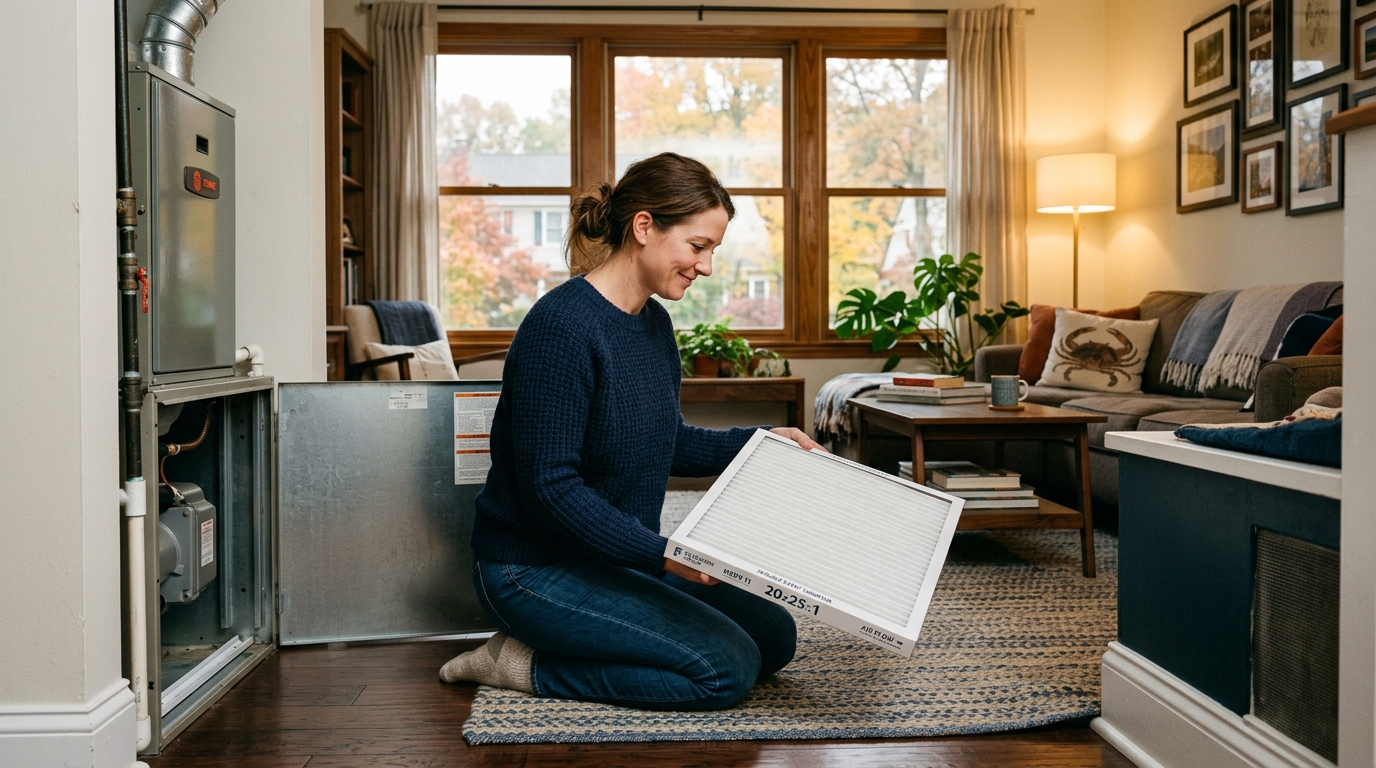
Most homes use a basic MERV 8 filter. That filter catches large dust, but it does not catch fine pollen, mold spores, or pet dander.
A filter rated MERV 13 captures a much higher share of allergens. The EPA recommends MERV 13 or higher for homes where someone has allergies, asthma, or other respiratory sensitivities.
Filters are the first step, but they cannot solve the problem on their own.
Dirty ducts will continue to feed allergens back into your living space. Humidity above 55 percent will continue to fuel mold growth and dust mite populations.
Solving indoor air quality is a layered project. Each upgrade closes one gap that the others cannot.
Four Upgrades That Make Spring Easier to Breathe
Indoor air quality improves through a layered approach. No single product solves every issue.
Here are the four upgrades that deliver real results in Maryland homes:
- Upgrade to a MERV 13 or HEPA-grade filter sized for your blower
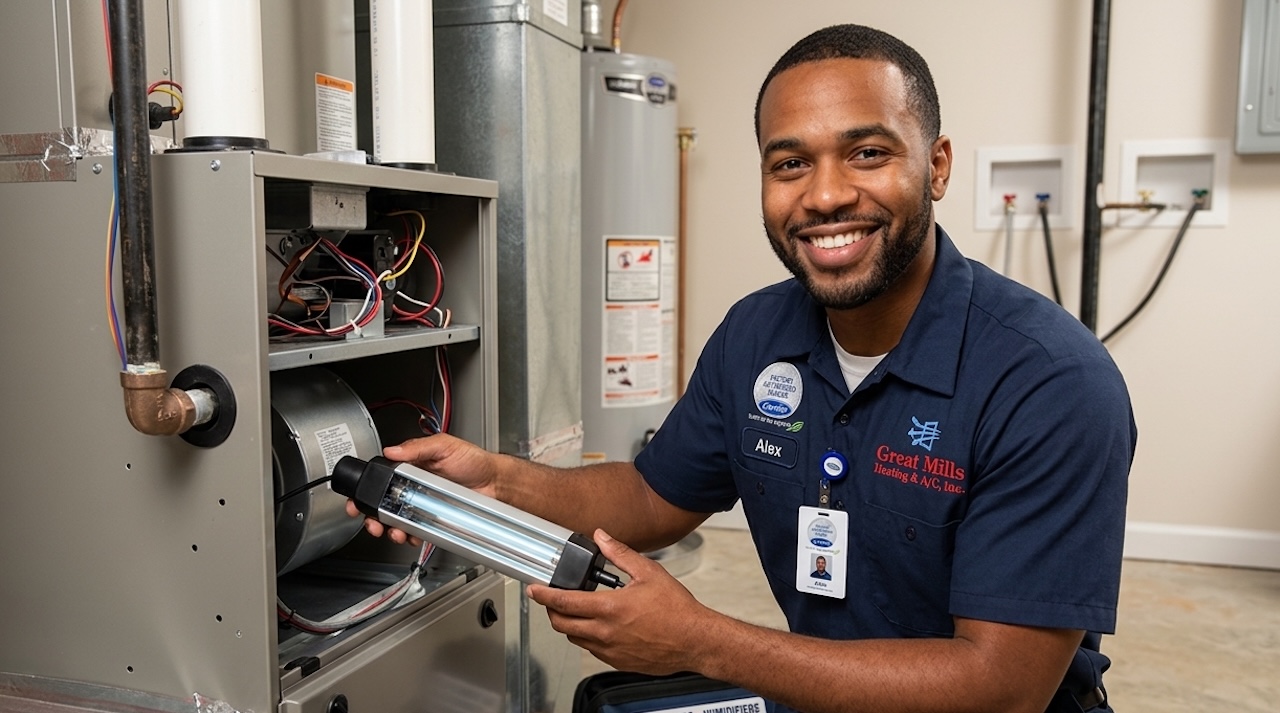
- Add UV-C lights inside the air handler to neutralize mold and bacteria on the coil
- Install a whole-home dehumidifier to keep humidity between 40 and 50 percent
- Schedule a professional when ducts hold years of dust and pollen residue
A MERV 13 filter upgrade is the cheapest first step. Most homes spend $30 to $60 per filter and change them every 60 to 90 days during heavy use.
Some older blower motors cannot handle the airflow restriction of a MERV 13 filter. A quick check by our technician confirms what your system supports before you make the switch.
UV-C lights add about $400 to $700 installed in a single afternoon. They run continuously and target mold spores, bacteria, and viruses on the evaporator coil where the air is coldest and dampest.
Whole-home dehumidifiers run higher, typically $1,500 to $2,500 installed, but they solve the muggy bedroom problem that no thermostat alone can fix in a Maryland summer.
Our service pairs well with any of the above upgrades. Clean ducts and a strong filter work together far better than either one alone.
Most Lexington Park homes that have not cleaned their ducts in five or more years hold a measurable layer of fine dust and pollen inside the supply runs.
Pulling that material out gives your new filter and your IAQ accessories a clean baseline to protect.
Homeowners often notice the air feels lighter within the first 24 hours after a full IAQ visit. That difference is real and measurable on indoor air quality monitors.
Take One Indoor Air Step This Month
Allergy season in Maryland peaks in May and runs hard through June.
Cleaner indoor air means fewer doctor visits, better sleep, and a calmer home for everyone under the roof.
Even one upgrade this month, whether a filter, a UV light, a dehumidifier, or a , will make a measurable difference within the first week.
Layering all four delivers results that no single product can match on its own.
Call Great Mills Heating and AC at (301) 381-2679 to schedule an indoor air quality consultation in Lexington Park, Hollywood, or Leonardtown.
Visit our contact page to request a written estimate or ask which IAQ upgrade fits your home best.