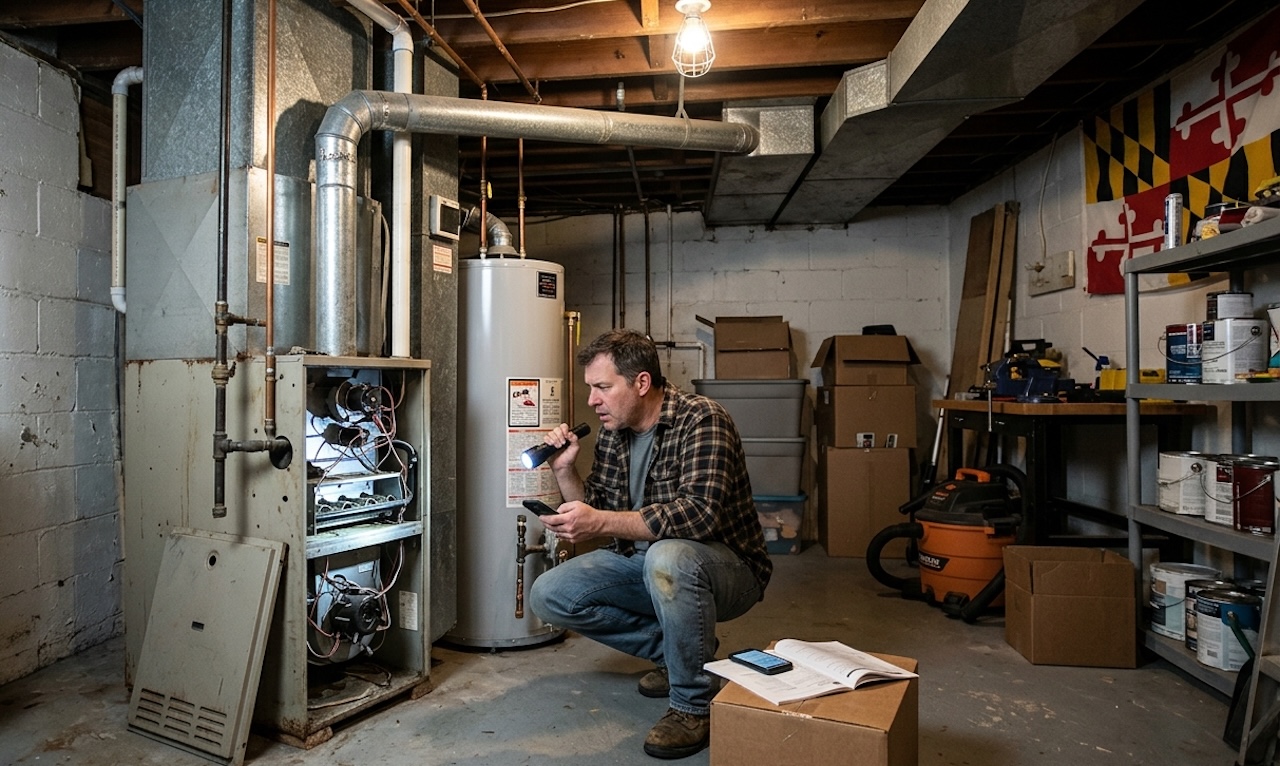

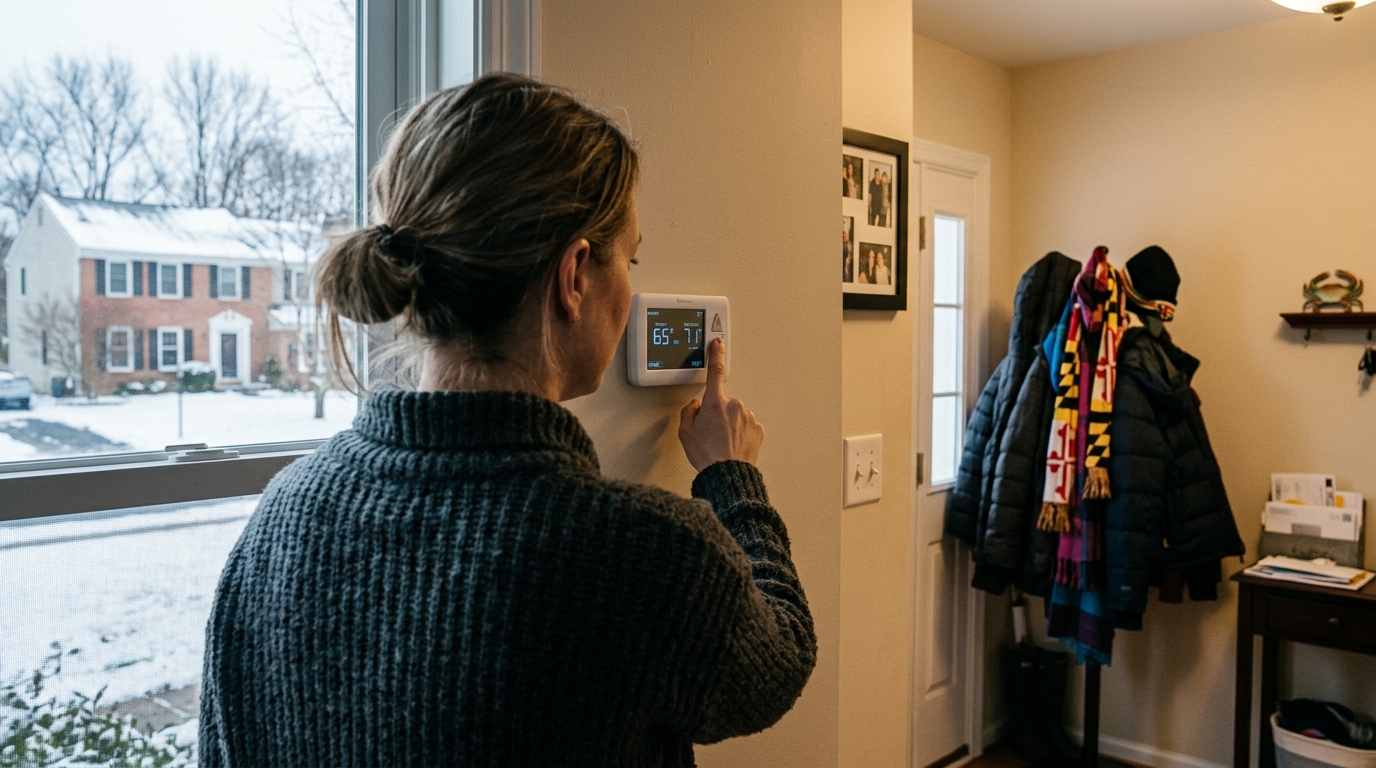
Heat pumps are common across Southern Maryland, from newer homes in California, MD to older houses in Leonardtown.
Most winters, they keep the house warm and everyone comfortable without much fuss.
In this article, we will look at what you should do when your heat pump is not heating.
Check four things first: the thermostat mode, the air filter, the breakers, and the outdoor unit for heavy ice. If none of those fixes the problem, call a heat pump technician.
Why Your Maryland Heat Pump is Blowing Cool Air
It's a chilly evening in Marlyand, and the house just isn't warming up. You hold your hand to the vent, and the air feels barely warm.
Maybe the outdoor unit is running well, or maybe it's covered in frost, or it's sitting completely silent.
When the electric bill arrives, it's noticeably higher than last winter. That moment is usually when frustration sets in.
What's causing it?
The most common culprits of a furnace not heating are simple: a wrong thermostat setting, a clogged filter, or a tripped breaker. Others are mechanical, like low refrigerant, a failed capacitor, or a stuck reversing valve.
Ignoring a heat pump that can't keep up costs you twice. Your backup electric heat runs constantly, and the compressor wears out faster.
How Cold Can it be before a Heat Pump Stops Working?
Many homeowners believe heat pumps stop working below freezing. That belief is outdated, because technology has improved a lot.
A heat pump moves heat from the outdoor air into your home. Even 20°F air still holds usable heat, so the system keeps running well below freezing.
What's the lowest temperature a heat pump will work at? It depends on the model. Under ENERGY STAR's cold climate criteria, certified models keep at least 70% of their heating capacity at 5°F.
Older standard heat pumps lose capacity faster as temperatures fall. On the coldest nights, they lean on auxiliary heat to close the gap.
The technology keeps improving. The U.S. Department of Energy reports that cold climate heat pumps can cut household energy use by up to 40%.
Southern Maryland nights rarely stay near 5°F for long. That's why a healthy heat pump here should handle most winter weather on its own.
Four Things to Check on Your Furnace Before You Call
Here's how to troubleshoot a heat pump that will not heat. Work through these four checks in order.
- Check the thermostat mode. Make sure it's set to Heat, not Cool or Fan. Set it a few degrees above room temperature, and replace the batteries if the screen looks dim.
- Check the air filter. A clogged filter chokes airflow and makes the air feel cool. Replace it if you can't see light through it.
- Check the breakers. Heat pumps usually have separate breakers for the indoor and outdoor units. Reset a tripped breaker once, and call us if it trips again.
- Check the outdoor unit. Clear away leaves, snow, and anything blocking the sides. Light frost is normal, but a solid block of ice isn't.
Did one of these steps fix it? Great. If not, the problem is likely inside the system.
Normal Defrost vs. a Frozen Heat Pump
Frost on the outdoor coil is part of normal winter operation. Your heat pump clears it with a defrost cycle.
Here's how to tell the difference between normal and a problem:
- Normal defrost: The outdoor fan stops, you hear a whoosh, and steam rises for a few minutes.
- A real problem: Thick ice covers the coil and doesn't clear within an hour or two.
- Another red flag: Ice builds on the top of the unit from a leaking gutter overhead.
During defrost, your indoor air feels cooler for a few minutes. That change is expected and harmless.
What Your Furnace Auxiliary Heat Light Means
Most heat pump thermostats show an "Aux Heat" or "Emergency Heat" indicator. Auxiliary heat is backup electric heat that kicks in when the heat pump needs help.
Aux heat running during defrost or on a very cold night is normal. Aux heat running all day when it's 45°F outside isn't.
That pattern means your heat pump can't keep up with the cold on its own. The cause is usually low refrigerant, an airflow problem, or a failing part.
Use the "Emergency Heat" setting only as a short-term backup. Running on backup heat alone costs far more than running the heat pump.
When to Call for Heat Pump Repair
Call a professional if your quick checks didn't help. Also call if the breaker keeps tripping, you hear grinding, or ice won't clear.
What will a heat pump repair cost? According to Angi's 2026 heat pump repair cost data, most homeowners pay $161 to $661. The national average is about $410.
Angi lists typical costs of $120 to $400 for a capacitor or contactor. A reversing valve runs $200 to $650, and a refrigerant leak repair runs $300 to $1,200.
A compressor is the big one, at $650 to $2,400. These figures are national typical ranges, not Great Mills pricing.
Age matters here too. ENERGY STAR suggests considering replacement once a heat pump is more than 10 years old.
At Great Mills Heating & AC, we repair, maintain and replace heat pumps across St. Mary's, Charles and Calvert counties. See what's involved on our heat pump service page.
Stay Warm All Winter in Southern Maryland
In conclusion: a heat pump not heating is often a simple fix. Start with the thermostat, filter, breakers and outdoor unit.
If those checks don't solve it, or aux heat runs all day, the system needs a professional look. Catching the problem early protects your compressor and your electric bill.
Great Mills Heating & AC helps homeowners in Lexington Park, Leonardtown, California, Hollywood and Waldorf stay warm all winter.
Want your heat pump checked before the cold sets in? Call Great Mills Heating & AC at (301) 381-2679 or reach the team through the contact page.
Frequently Asked Questions About Heat Pumps Not Heating
Why is my heat pump not heating?
Common causes are a wrong thermostat setting, a clogged filter, a tripped breaker, or heavy outdoor ice. If those check out, low refrigerant or a failed part is likely.
What is the lowest temperature a heat pump will work?
Standard heat pumps keep working below freezing but lose capacity as it gets colder. ENERGY STAR cold climate models keep at least 70% of their heating capacity at 5°F.
Why can't my heat pump keep up with the cold?
On very cold nights, auxiliary heat helps by design. If it struggles on mild days, the cause is usually low refrigerant, poor airflow, or a failing part.
Is it normal for my heat pump to have ice on it?
Light frost and short defrost cycles with some steam are normal. Thick ice that doesn't clear within an hour or two needs a technician.
Should I use emergency heat?
Only as a short-term backup while you wait for a repair. Running on emergency heat alone costs far more than running the heat pump.