
For a few weeks every fall, your Southern Maryland home feels perfect. The windows are open, the breeze moves through, and the air feels fresh.
Then the cold arrives, and you close everything up.
From that moment until next spring, your family breathes the same air over and over. Dust, pet dander, cooking particles, and dry heated air all get trapped inside with you.
Indoor air can be more polluted than the air outside your home. According to the U.S. Environmental Protection Agency, indoor levels of some pollutants are often two to five times higher than outdoor levels. Once the windows close for the season, that gap widens.
You feel it before you understand it. Scratchy throats in the morning. More sneezing. Dry skin and stubborn dust on every surface.
In this article, we'll explain why your indoor air quality in Maryland changes when the windows close, and four ways to keep it healthy through heating season.
Why Your Indoor Air Gets Worse in Fall
The problem isn't that your home suddenly makes more pollutants. The problem is that they stop leaving.
Open windows dilute indoor air with fresh outdoor air. When you seal the house for winter, that natural ventilation disappears. Everything your household generates now stays inside.
The reason this matters so much in fall is that your heating system starts recirculating that same trapped air. Your furnace pulls it in, warms it, and pushes it back out through the vents.
Three things change fast once the windows close:
- Particles build up. Dust, dander, and pollen have nowhere to go and keep cycling through the system.
- Humidity drops. Heated air is dry air, which irritates sinuses, skin, and even wood floors.
- Odors linger. Cooking, pets, and everyday living smells hang around far longer.
The EPA notes that Americans spend roughly 90% of their time indoors (https://www.epa.gov/report-environment/indoor-air-quality). During a Maryland winter, that number climbs even higher. The air in your home is the air your family breathes almost all day.
Four Ways To Keep Your Air Healthy This Season
You don't have to accept stuffy, dry winter air. A few targeted steps make a real difference in how your home feels.
Here's where to focus your time and money for the biggest impact.
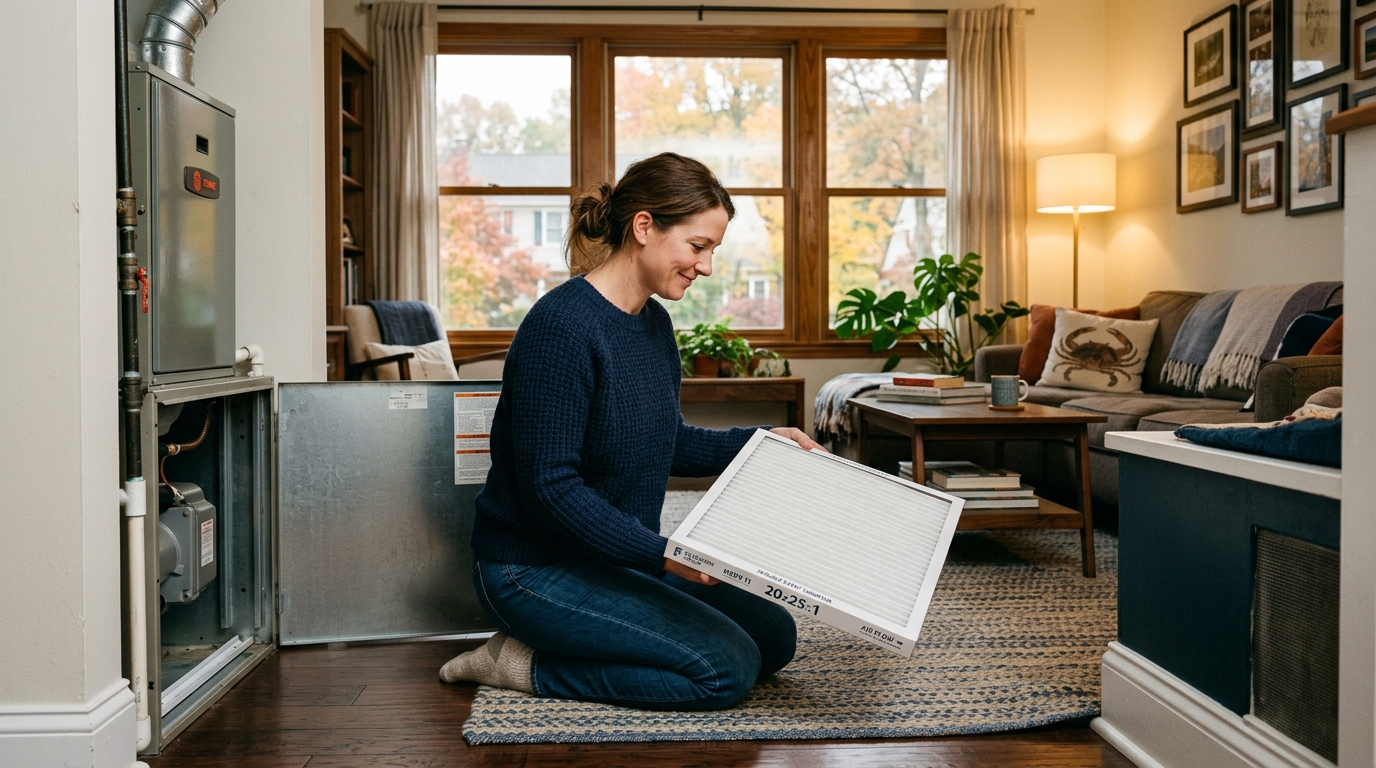
1. Upgrade your furnace filter. This step is the fastest and cheapest win. A better-quality filter traps more of the fine particles that irritate lungs and sinuses. The U.S. Department of Energy recommends checking your filter monthly during peak use and replacing it on schedule. A clean filter protects both your air and your furnace.
2. Balance your humidity. Dry winter air is uncomfortable and hard on your home. A whole-home humidifier keeps moisture in a healthy range, which eases dry skin and helps your heat feel warmer at a lower thermostat setting.
3. Add air purification. UV air purifiers and advanced filtration attack the particles and germs that regular filters miss. Great Mills installs indoor air quality equipment sized for your specific home and heating system.
4. Seal your ductwork. Leaky ducts pull dusty, unconditioned air from attics and crawl spaces into your living rooms. Aeroseal duct sealing closes those gaps from the inside, so the air moving through your home is the air you actually filtered and heated. This step also lowers your energy bills by stopping conditioned air from escaping.
Each of these steps ranges from a quick filter swap to a planned equipment install. A technician can walk your home and tell you which ones fit your situation and budget.
Start With One Simple Check
You don't have to tackle all four at once.
Start with the filter, since it's the fastest and most affordable. Then talk with a technician about humidity and air purification if dry air or allergies bother your family.
At Great Mills, we've helped Southern Maryland homeowners breathe easier since 1972. Our NATE-certified technicians serve Lexington Park, California, Leonardtown, Hollywood, Mechanicsville, and Waldorf. You can explore our full HVAC services to see what fits your home.
An ongoing HVAC maintenance plan also keeps your filters, humidity, and system health on a regular schedule, so healthy air becomes automatic.
The sealed-house season lasts five months in Maryland. A little attention now pays off every day until spring.
Breathe Easier All Winter Long
When the windows close for fall, your indoor air quality in Maryland changes overnight. Particles build up, humidity drops, and your family breathes the same recirculated air for months.
The fix is straightforward. Upgrade your filter, balance your humidity, add air purification, and seal your ductwork. Each step makes your home healthier and more comfortable through heating season.
Ready to make your winter air cleaner and easier to breathe?
Call the Great Mills Heating & AC team at (301) 381-2679 or visit our contact page to talk with a technician today.
Indoor Air Quality FAQ
Why does indoor air quality get worse in the fall?
When you close your windows for the cold season, natural ventilation stops and indoor pollutants stay trapped inside. Your heating system then recirculates that same air, so dust, dander, and dryness build up over the winter.
What is the best way to improve indoor air quality in a Maryland home?
Start with a better furnace filter, then balance humidity, add air purification such as UV or advanced filtration, and seal leaky ductwork. A technician can tell you which steps fit your home and budget.
How does duct sealing improve indoor air quality?
Leaky ducts pull dusty, unconditioned air from attics and crawl spaces into your living areas. Duct sealing closes those gaps, so the air in your home is the air you actually filtered and heated.
How often should I change my furnace filter in winter?
Check your furnace filter monthly during heavy use and replace it on schedule. A clean filter traps more particles and helps your furnace run efficiently all season.