
You walk over to the vents expecting cool air. Instead you feel a weak, lukewarm trickle.
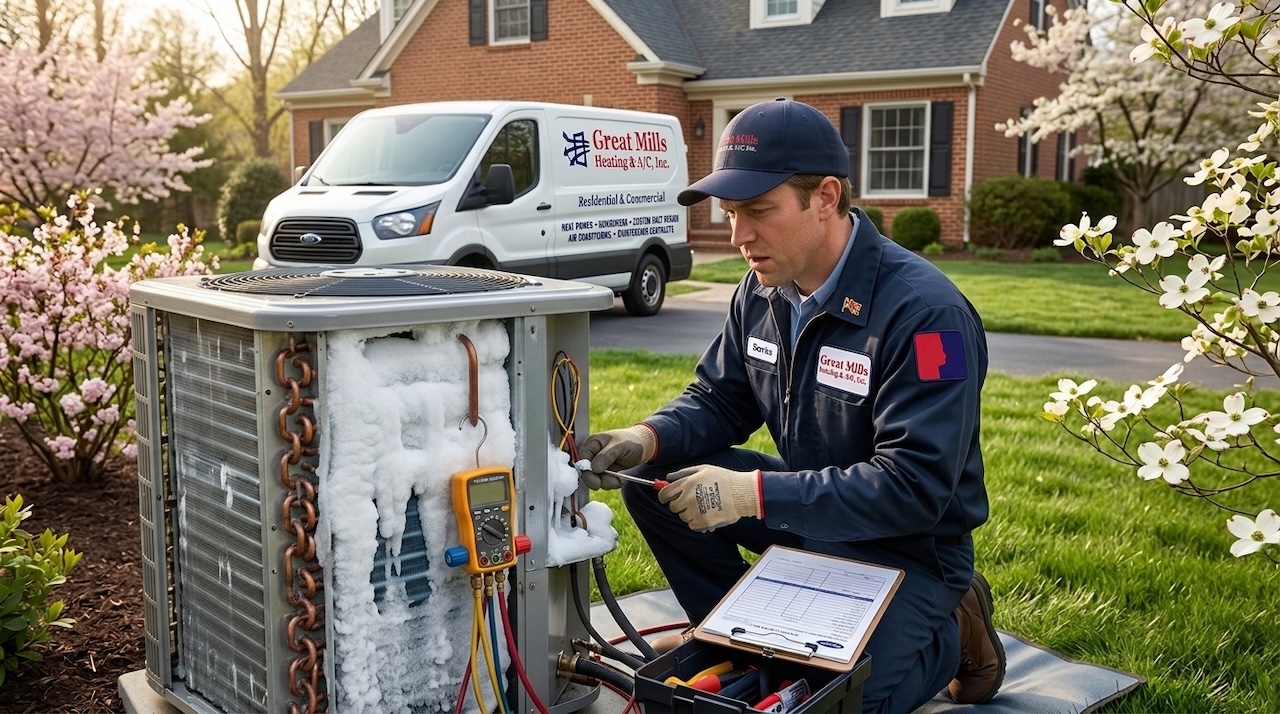
Then you spot it. A layer of frost or solid ice wrapped around your AC unit.
It seems strange. Your air conditioner is supposed to fight the heat, not turn into a block of ice.
In Lexington Park and across Southern Maryland, this happens more than you'd think. Our summers are hot and heavy with humidity.
That thick, sticky summer air puts your cooling system under real stress. When something inside the system slips out of balance, ice forms fast.
A frozen AC unit isn't just annoying. It signals a problem that gets worse the longer you wait.
Ignore it, and you risk a burned-out compressor. That repair runs into the thousands.
The good news is simple. Most causes of a frozen AC unit are fixable, and many are preventable.
In this article, we'll explore why your AC freezes up in Maryland humidity, what's really going on inside the system, and how you can find help if you need it.
What Freezing Up Actually Means Inside Your AC
Your air conditioner cools your home by pulling heat out of the indoor air. The part that does this work is the evaporator coil.
Refrigerant inside that coil gets very cold. Warm air from your home blows across it, and the heat transfers away.
The coil needs a steady flow of warm air to stay above freezing. When that airflow drops, the coil temperature falls below 32 degrees.
Any moisture on the coil then turns to ice. In humid Maryland air, there's plenty of moisture to freeze.
Once ice starts, it snowballs. The frost blocks airflow even more, which makes the coil colder, which builds more ice.
Humidity makes everything harder here. The EPA notes that indoor relative humidity above 60 percent encourages mold and moisture problems, per the guide to indoor air quality.
That same damp air gives your coil more water to freeze. So a small airflow issue snowballs faster in our climate than it would in a dry one.
A common misconception is that ice means the AC is "working too hard." The opposite is usually true. Ice almost always points to restricted airflow or low refrigerant.
The Most Common Reasons Your AC Freezes
A few clear culprits cause most frozen AC units. Here are the ones we see most often in Southern Maryland homes.
- A dirty air filter. This is the number one cause. A clogged filter starves the coil of warm airflow.
- Closed or blocked vents. Furniture over a return vent chokes the system the same way a dirty filter does.
- Low refrigerant. A leak drops system pressure, the coil gets too cold, and ice forms.
- A dirty evaporator coil. Dust on the coil acts like a blanket and traps the cold.
- A failing blower fan. Weak fan movement means weak airflow across the coil.
Notice the pattern. Most of these come back to airflow.
The U.S. Department of Energy reports that a dirty filter can raise energy use by 5 to 15 percent, in its guide on maintaining your air conditioner. That same blockage is what starves your coil and triggers ice.
Refrigerant is the exception. Low refrigerant points to a leak, and that's a job for a licensed technician.
How To Thaw and Fix a Frozen AC Unit
Here's how to handle a frozen AC unit step by step. Start with the safe DIY moves, then call for backup.
First, turn the system off. Running a frozen unit can damage the compressor.
Switch the thermostat from "cool" to "off." Then set the fan to "on" so air keeps moving over the coil.
Next, let it thaw fully. A complete thaw takes a few hours, so be patient.
While it melts, swap in a clean air filter. This single fix solves a large share of freeze-ups, and a new filter costs around 15 to 30 dollars.
Walk your home and open every supply and return vent. Pull furniture and rugs away from them.
Once thawed, turn cooling back on. Watch for steady, cold airflow within an hour.
If it freezes again, the cause runs deeper. Low refrigerant, a dirty coil, or a weak blower needs trained hands and tools.
A professional AC repair visit pinpoints the real fault fast. A technician checks refrigerant levels, inspects the coil, and tests the blower.
Want to stop freeze-ups before they start? Routine AC service and maintenance catches dirty coils and low refrigerant early. The Department of Energy confirms regular maintenance keeps systems running efficiently, in its central air conditioning guide.
Most repair visits land in the 150 to 450 dollar range, depending on the cause. A refrigerant leak repair costs more, but it protects the far pricier compressor.
Keep Your Home Cool All Summer
A frozen AC unit in the middle of a Maryland heat wave is stressful. The fix usually comes down to airflow, refrigerant, or a dirty coil.
You can handle the easy steps yourself. Turn it off, let it thaw, and replace the filter.
When ice keeps coming back, that's your signal to bring in a professional. Trying to force a frozen system only risks a costly compressor failure.
Great Mills Heating & AC serves homeowners across Lexington Park, St. Mary's County, and Southern Maryland. Our team finds the real cause and gets your cooling back fast.
Call the Great Mills team todat at (301) 381-2679 to schedule your repair, or reach out through our contact page. We're here to help you stay cool this summer.