
The first hard freeze is coming to Southern Maryland, and your furnace is about to earn its keep. Homes from Lexington Park to Leonardtown are firing up the heat for the season.
So what should you do when your furnace is blowing cold air? Check four things first: the thermostat fan setting, the air filter, the furnace power switch, and the gas valve. If none of them fixes it, call a furnace repair technician.
When Your Furnace Blows Cold Air on a Freezing Night
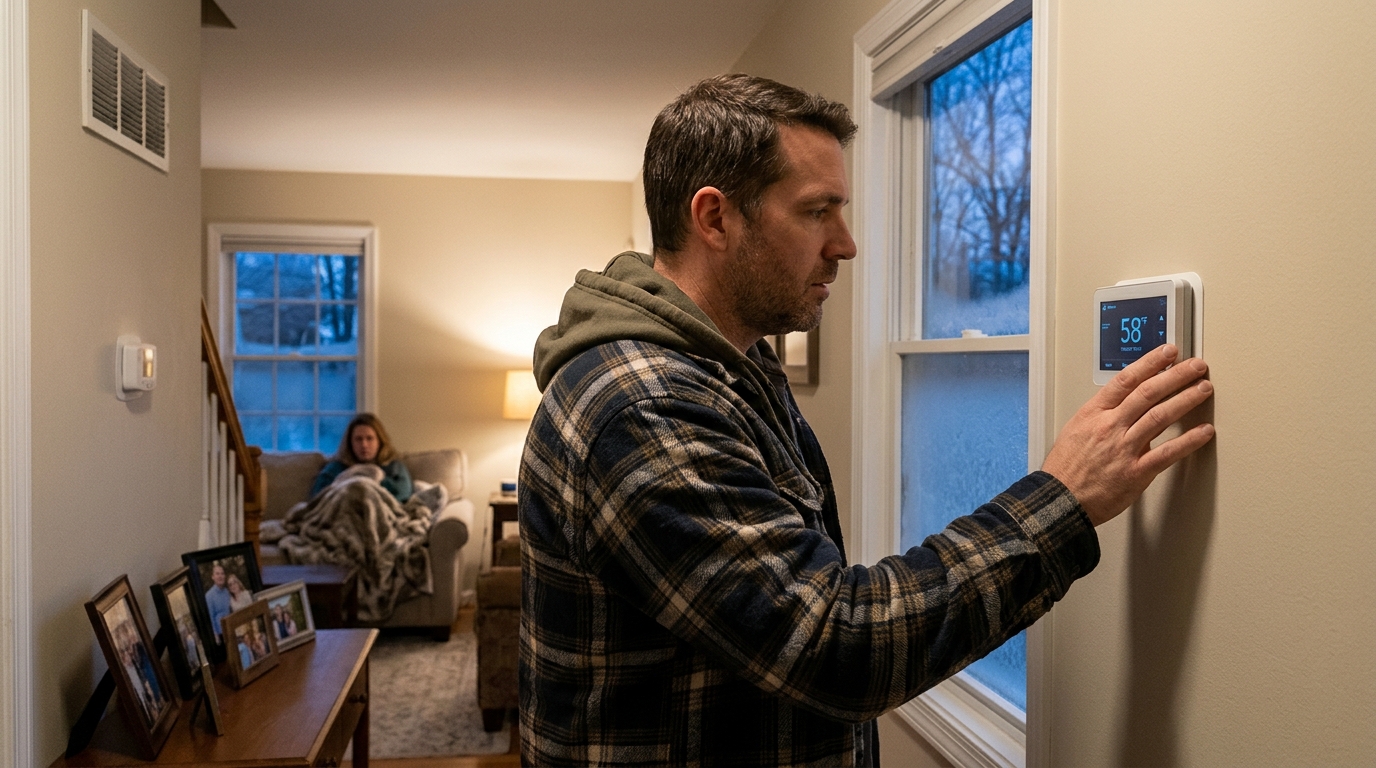
It's late, the temperature is dropping, and the house feels colder by the hour. You hold your hand to the vent, and the air feels cool.
Maybe the furnace clicks on and shuts off again. Maybe it never starts at all.
Your family is bundled in sweaters, and you're wondering how much this will cost. That sinking feeling is real.
What went wrong? Most causes are simple: a thermostat setting, a clogged filter, or a switch that got bumped. Others are mechanical, like a dirty flame sensor, a worn ignitor, or an overheating limit switch.
Ignoring a furnace that blows cold air costs you twice. Your system strains harder, and a small repair becomes a bigger one.
In this article, we'll explore quick checks you can do safely and how to find help if you need it.
Why a Furnace Blows Cold Air
Your furnace heats air inside a sealed chamber, then pushes it through your home. Cold air at the vents means the heating step didn't happen, or it shut down early.
Many homeowners assume cold air means a dead furnace. That's a common misconception.
The fan can run perfectly while the burners stay off. A safety control may have stopped the burners to protect the system.
Airflow matters just as much as flame. ENERGY STAR explains that a dirty air filter makes your heating system work harder to move air through your home.
The same agency recommends inspecting your filter once a month during heating season. A dirty filter can also damage equipment and lead to early failure.
Four Checks Before You Call
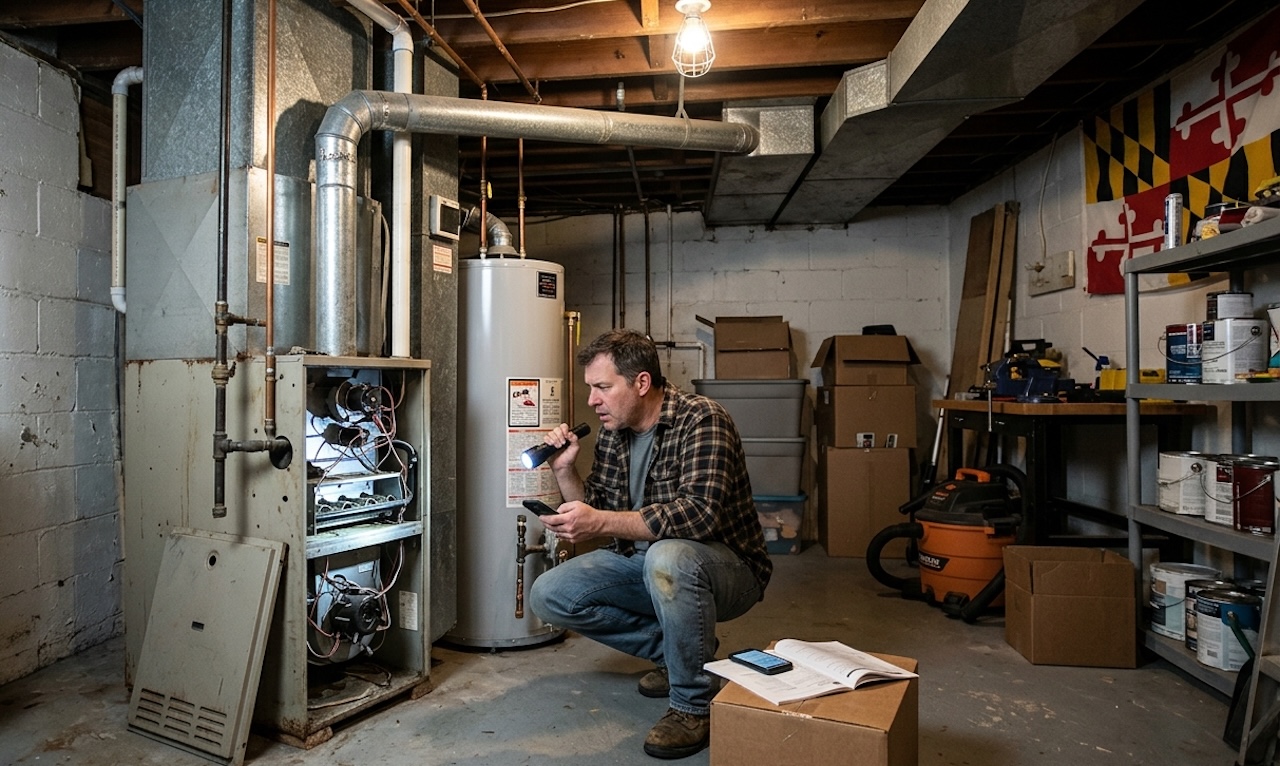
Here's how to troubleshoot a furnace that's blowing cold air. Work through these in order, and never open the furnace panels yourself.
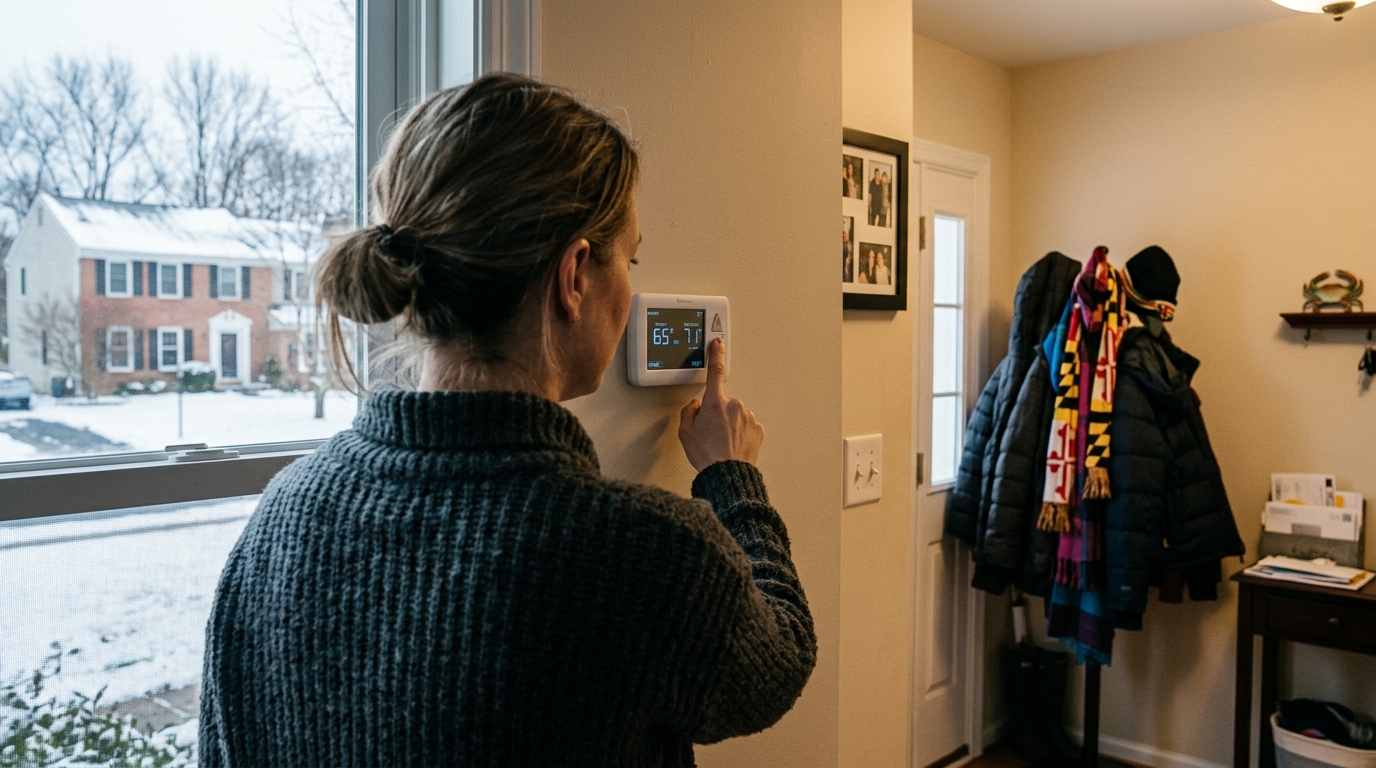
- Check the thermostat. Set it to Heat, then set the fan to Auto. The On setting runs the fan constantly, which blows cool air between heating cycles.
- Check the air filter. Slide it out and hold it to the light. Replace it if you can't see through it.
- Check the furnace power switch. It looks like a light switch on or near the furnace. Make sure it's on, and reset a tripped breaker once.
- Check the gas valve. The handle should sit parallel to the pipe. If you smell gas, leave the house and call your gas utility.
Did one of these fix it? Great. If not, the problem is inside the furnace.
These checks take about ten minutes. They also give your technician a head start, because you can describe exactly what you tried.
Furnace Not Turning On
A furnace that won't start usually points to power, the thermostat, or the ignition system. Dead thermostat batteries are a surprisingly common cause.
Here's what to look for:
- Silence: Nothing happens when you raise the thermostat. Check the batteries, the switch and the breaker.
- Clicking, then nothing: The ignitor or gas supply may be failing.
- Blower runs, no heat: A safety control may be blocking the burners.
Do the four checks above first. Then call a technician, because ignition and gas parts are not a DIY job.
Furnace Short Cycling
Short cycling means your furnace turns on, runs a few minutes, and shuts off. Then it repeats, again and again.
Each restart wears out parts and wastes energy. Your home also never heats evenly.
You may notice rooms that stay cold while the furnace seems to work constantly. That pattern is a classic short cycling sign.
The most common cause is overheating from restricted airflow. A clogged filter or blocked return vent trips the limit switch, and the burners shut down.
Replace the filter and clear furniture from the vents. If the cycling continues, a dirty flame sensor or a failing part is likely.
When to Call for Furnace Repair
A furnace repair visit is the safest route when gas or ignition parts are involved. Technicians have the tools to test safety controls without risk.
Call a professional if your checks didn't help. Also call if the breaker keeps tripping, you hear banging, or the furnace shuts off repeatedly.
Age matters too. ENERGY STAR suggests talking to a contractor about replacement once a furnace is more than 15 years old.
At Great Mills Heating & AC, we diagnose and repair furnaces across St. Mary's, Charles and Calvert counties. Learn what's involved on our furnace repair page.
Missed our September guide? Will Your Furnace Start on the First Cold Night? covers seasonal startup and prevention.
Stay Warm This November in Southern Maryland
In conclusion: a furnace blowing cold air is often a simple fix. Start with the thermostat, filter, power switch and gas valve.
If those checks don't solve it, or your furnace keeps short cycling, the system needs a professional look. Catching it early protects your furnace and your heating bills.
Great Mills Heating & AC helps homeowners in Lexington Park, Leonardtown, California, Hollywood and Waldorf stay warm all winter.
Want your furnace checked before the next freeze? Call Great Mills Heating & AC at (301) 381-2679 or reach the team through the contact page.
Frequently Asked Questions
Why is my furnace blowing cold air?
Common causes are a thermostat fan set to On, a clogged filter, or a tripped switch. If those check out, a dirty flame sensor, bad ignitor or safety control is likely.
Why is my furnace not turning on?
Check the thermostat batteries, the furnace power switch and the breaker first. If the furnace still won't start, call a technician to inspect the ignition system.
What does furnace short cycling mean?
Short cycling means the furnace starts, runs briefly and shuts off, over and over. A clogged filter or blocked airflow is the most common cause.